Choosing the right dog harness can make daily walks, training sessions, and outdoor adventures more comfortable and enjoyable. If you have an active dog, you’ve probably come across tactical dog harnesses. These rugged-looking harnesses are popular among dog owners who want practical walking gear with an outdoor-inspired design.
But is a tactical dog harness the right choice for your dog? And what should you look for before buying one?
In this guide, we’ll explore the features, benefits, sizing tips, and important factors to consider when choosing a tactical dog harness.
What Is a Tactical Dog Harness?
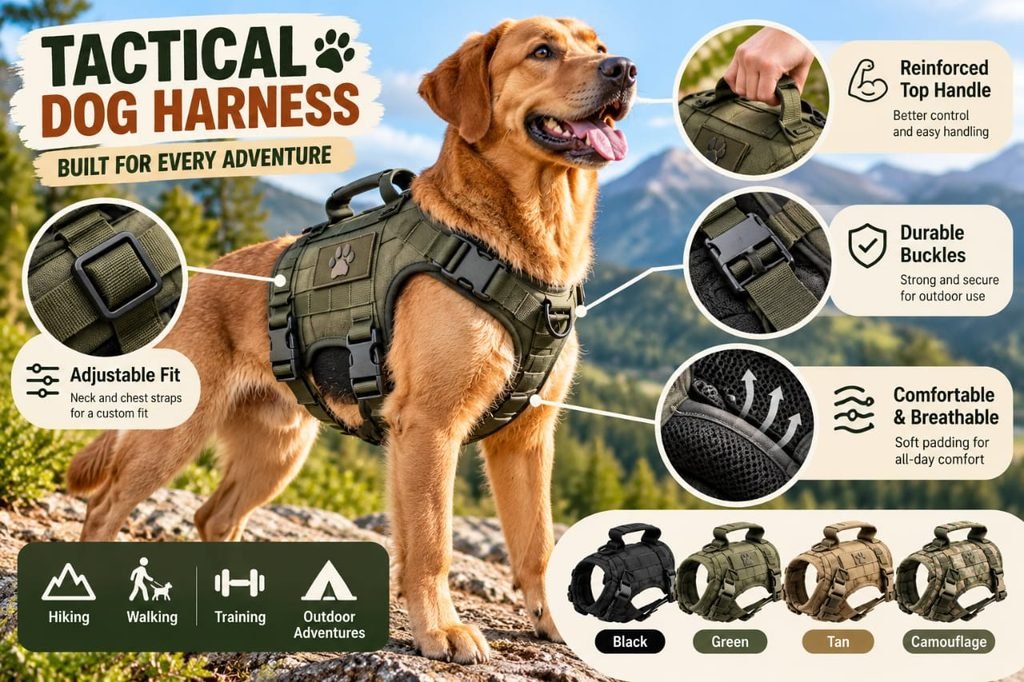
A tactical dog harness is a type of dog harness inspired by equipment used in outdoor activities and working-dog environments. It often features a rugged design, adjustable straps, strong-looking buckles, and additional attachment areas.
Unlike a basic walking harness, some tactical models include a top handle, MOLLE-style webbing, or extra attachment points for accessories.
These features can make certain models useful for hiking, outdoor training, and other activities, depending on their construction and intended use.
However, not every tactical harness offers the same features. Always check the manufacturer’s specifications before making a purchase.
7 Benefits of Using a Tactical Dog Harness
A properly fitted harness gives you an alternative to attaching a leash directly to your dog’s collar.
Some tactical harnesses feature front or back leash attachment points. Depending on your dog’s behavior and the harness design, these can offer different handling options.
Remember that a harness alone does not replace leash training.
Many tactical dog harnesses feature adjustable straps around the chest and neck areas.
An adjustable design can help you achieve a more secure and comfortable fit, provided the harness is available in the right size for your dog.
Always measure your dog’s body instead of relying only on breed or weight recommendations.
One of the most recognizable features of tactical dog harnesses is their rugged appearance.
With webbing, buckles, and structured panels, these harnesses have a distinctive outdoor style that appeals to many dog owners.
They can be a practical-looking option for walks, hiking trips, and outdoor adventures.
Some models include additional attachment areas for accessories.
Depending on the product, these may allow you to attach small pouches, identification patches, or other compatible gear.
Before using accessories, check their weight and compatibility. Avoid adding unnecessary weight that could make your dog uncomfortable.
A suitable tactical harness can be part of your dog’s training equipment.
It may help with leash handling during outdoor practice, obedience exercises, and structured walks.
For dogs that pull excessively or have specific behavioral challenges, consider consulting a qualified trainer about the appropriate equipment and training approach.
Depending on its design, a tactical harness may be suitable for:
For demanding activities, make sure the harness is specifically designed and tested for the intended use.
If you prefer a more structured design with additional features, a tactical harness may be worth considering.
However, a simple, lightweight harness can be just as suitable for many dogs. The right choice depends on your dog’s size, comfort, activity level, and individual needs.
How to Choose the Right Tactical Dog Harness
Before buying a tactical dog harness, consider these important factors.
Measure Your Dog Correctly
Getting the right size is essential.
Use a flexible measuring tape to measure:
Compare your measurements with the seller’s size chart.
A properly fitted harness should be secure without restricting your dog’s breathing or natural movement.
Check the Materials and Construction
Look closely at the materials, stitching, buckles, and adjustment mechanisms.
Consider whether the harness is suitable for your dog’s strength and activity level.
Don’t assume that a military-style appearance automatically means a product is heavy-duty or escape-proof.
Look for Comfortable Padding
Padding may improve comfort in areas where the harness contacts your dog’s body.
Check that the material does not rub against the armpits, neck, or other sensitive areas.
For dogs with short coats or sensitive skin, comfort and fit deserve particular attention.
Choose the Right Leash Attachment
Different harnesses offer different leash attachment configurations.
A back attachment can be convenient for ordinary walks, while a front attachment may provide additional handling options for some dogs.
Choose the configuration that suits your dog’s behavior and your training goals.
Consider Your Dog’s Activity Level
An active dog that regularly explores trails may benefit from a different harness design than a small dog that mainly takes short neighborhood walks.
Think about where your dog will wear the harness and how long it will be used.
A lightweight, comfortable design may be more appropriate for everyday use than a bulky model with numerous accessories.
Tactical Dog Harness vs. Regular Dog Harness
Not sure which type to choose?
Here’s a simple comparison.
Feature| Tactical Dog Harness| Regular Dog Harness
Design| Rugged, outdoor-inspired| Usually simple and lightweight
Adjustability| Varies by model| Varies by model
Attachment points| May include additional attachment areas| Often designed mainly for leash use
Accessories| Some models support compatible accessories| Usually fewer accessory options
Best suited for| Outdoor activities and owners who prefer tactical styling| Everyday walks and general use
Weight| Can be heavier| Often lighter, depending on design
Neither option is automatically better for every dog. Prioritize comfort, fit, and suitability over appearance.
How to Introduce a New Harness to Your Dog
Some dogs accept a harness immediately, while others need time to get used to wearing one.
Follow these simple steps:
With patience and positive experiences, many dogs can gradually become comfortable wearing a new harness.
Common Mistakes to Avoid
Even a well-designed harness can cause problems if it’s used incorrectly.
Avoid these common mistakes:
Always inspect the harness regularly for damaged stitching, worn straps, or broken buckles.
Our Recommended Tactical Dog Harness
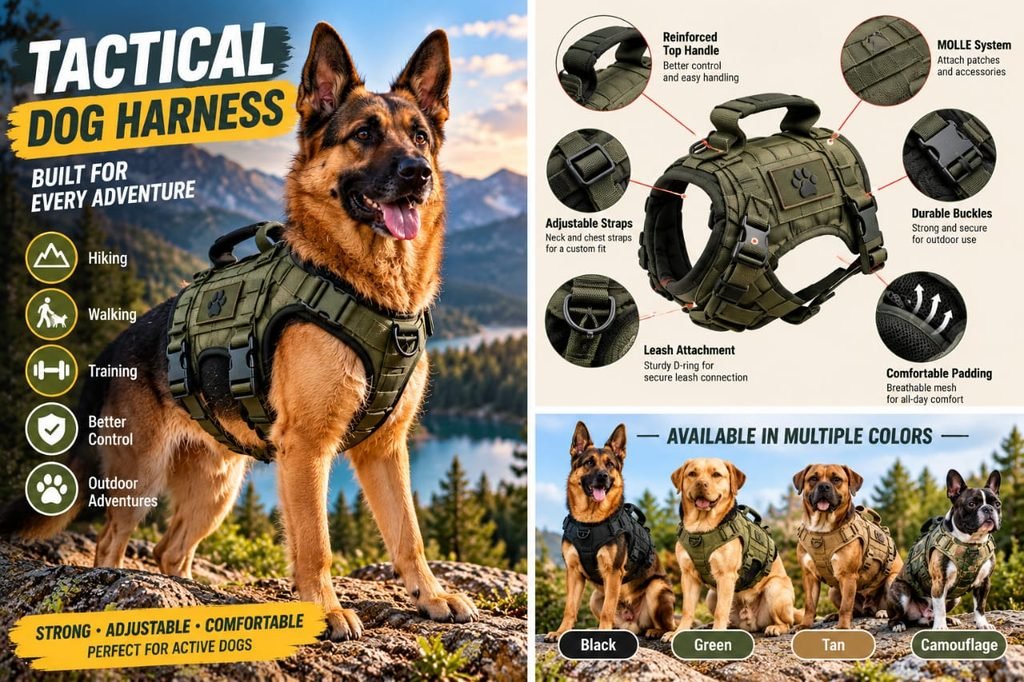
If you’re looking for a tactical-inspired harness with an adjustable design, take a look at the Tactical Dog Harness Vest available at Veziora.
Its rugged outdoor style makes it an option worth considering for dog owners interested in walking equipment and training gear.
Before ordering, review the available sizes, colors, product details, and seller information to make sure it matches your dog’s needs.
Explore the Tactical Dog Harness Vest at Veziora:
“Shop the Tactical Dog Harness Vest” (https://veziora.com/tactical-dog-harness-vest/)
Frequently Asked Questions
Are tactical dog harnesses good for everyday walks?
They can be suitable for everyday walks if the harness is comfortable, properly fitted, and appropriate for your dog’s size and behavior. Some dogs may prefer a lighter, simpler harness.
Can small dogs wear tactical harnesses?
Yes, provided the manufacturer offers an appropriate size and the harness fits the dog’s body correctly. Small dogs may benefit from lighter designs that do not restrict movement.
Is a tactical dog harness escape-proof?
No harness should automatically be considered escape-proof. Fit, design, adjustment, and your dog’s behavior all matter. Always supervise your dog and check that the harness is secure.
How tight should a dog harness be?
A harness should be snug without restricting breathing or movement. Many harness-fitting guides recommend leaving room for approximately two fingers between the harness and your dog’s body, but always follow the specific manufacturer’s fitting instructions.
How often should I inspect my dog’s harness?
Check it before use and inspect the stitching, buckles, straps, and attachment points regularly. Replace it if you notice damage that could compromise its safe use.
Final Thoughts
A tactical dog harness can be a useful option for dog owners who enjoy outdoor activities and prefer practical, rugged-looking walking gear.
The key is finding a harness that fits your dog properly, supports comfortable movement, and suits your everyday needs.
Take your time comparing designs, check the size chart carefully, and prioritize your dog’s comfort over extra features.
With the right equipment and positive training, you and your furry companion can enjoy many more walks and adventures together.




Leave a comment